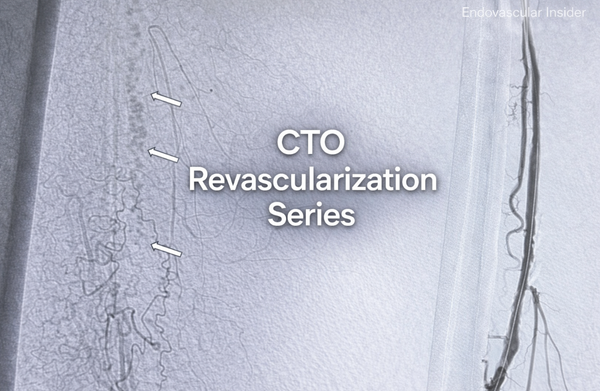
CTO REVASCULARIZATION series – Part 2C
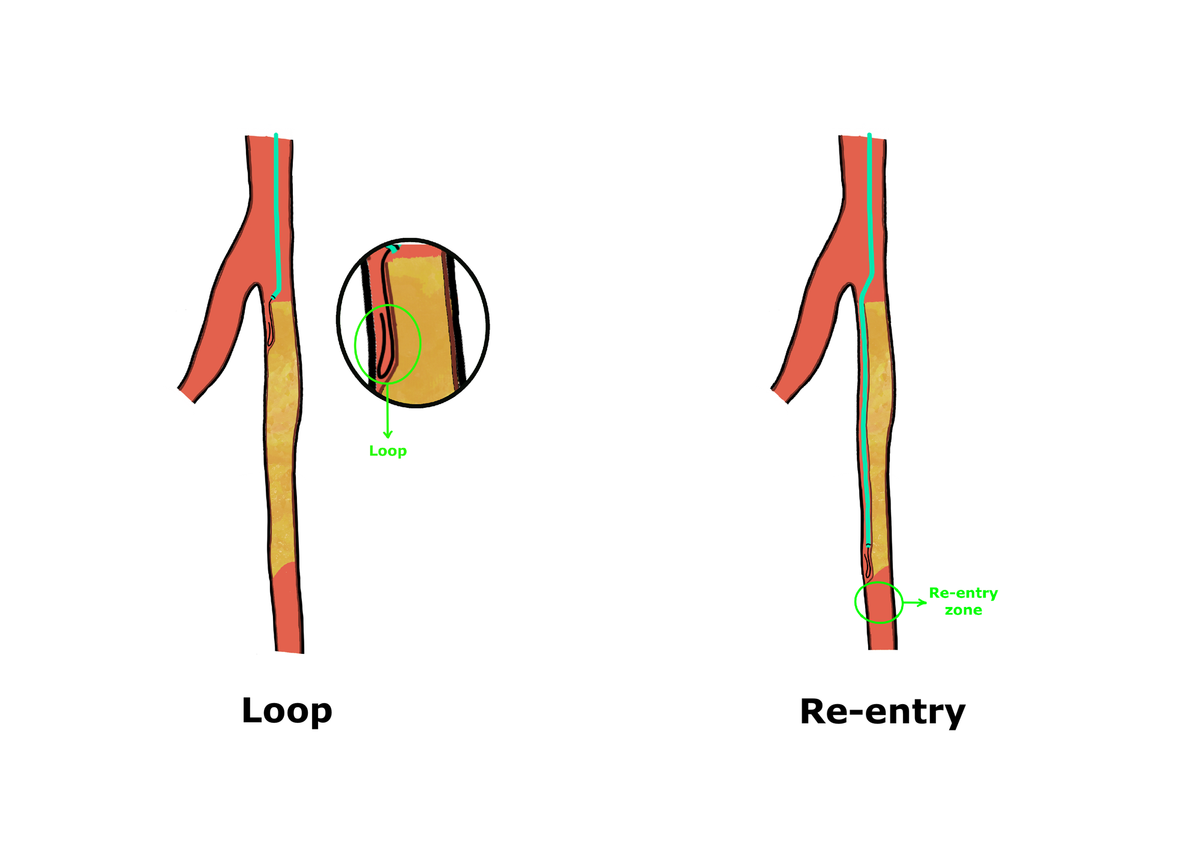
Once the decision is made to go subintimal, the technique becomes a matter of discipline: keeping the loop small, advancing the catheter behind the wire, and re-entering the true lumen right at the distal cap - the most demanding step of the entire procedure.

The Subintimal Plane and the Re-entry Problem
About Me | My Book | Previous posts | Manage Account
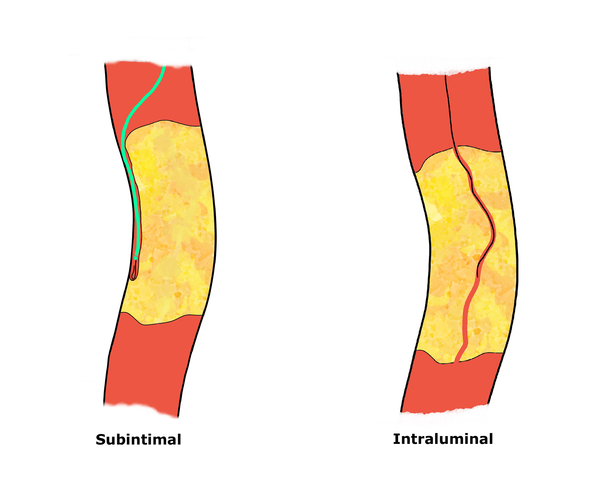
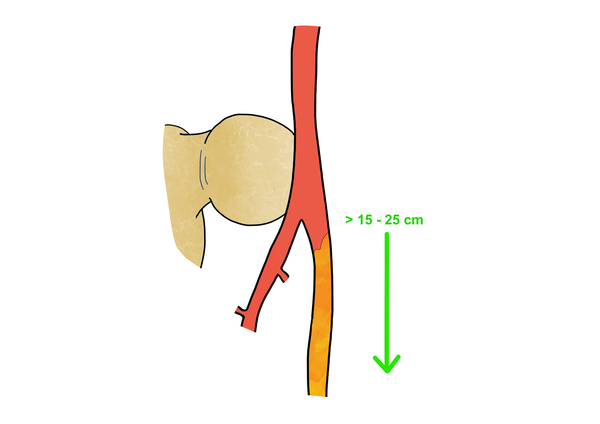
In the previous two articles (read the first here and the second here) we discussed the strategic dimension of long and multilevel CTOs and the relationship between intraluminal and subintimal recanalization. We turn now to the operational technique: how to handle the subintimal plane, and how to manage the most demanding phase of the entire procedure, the re-entry into the true lumen.
Entering and maintaining the subintimal plane
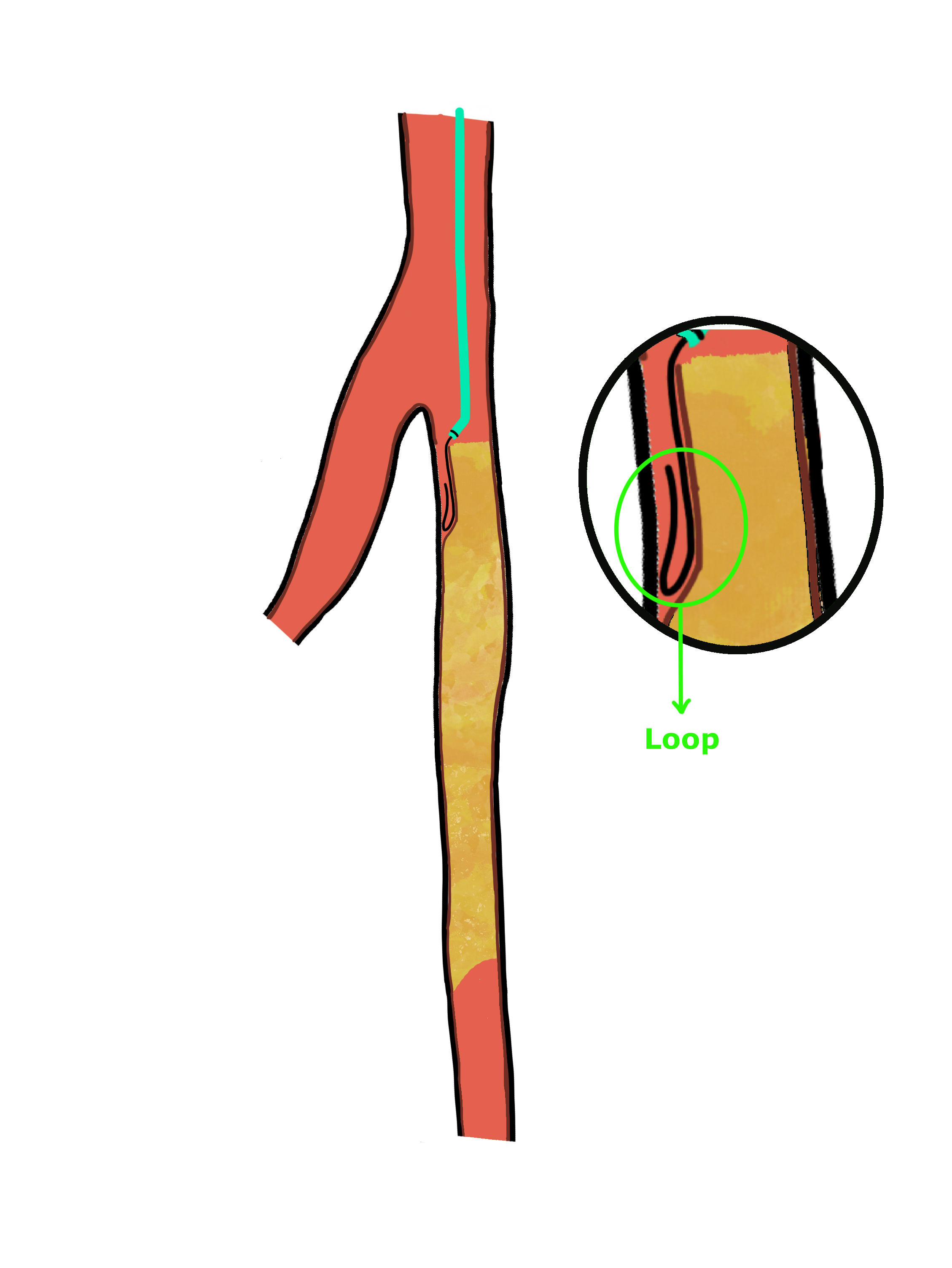
When sliding and drilling fail and the decision is made to go subintimal, the maneuver is straightforward: the catheter is oriented toward the vessel wall – adjacent to the proximal cap – and a low-to-moderate tip-load guidewire (V18 by Boston Scientific or equivalent in the femoropopliteal segment) is gently advanced. The wire creates a dissection between the intima and the media, entering the subintimal space. The unmistakable sign of correct entry is the characteristic loop the wire tip forms.