CTO REVASCULARIZATION Series — Part 2B
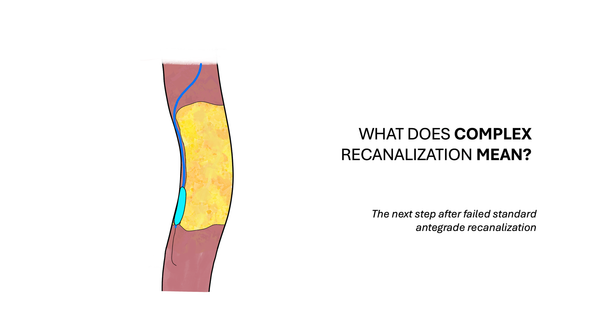
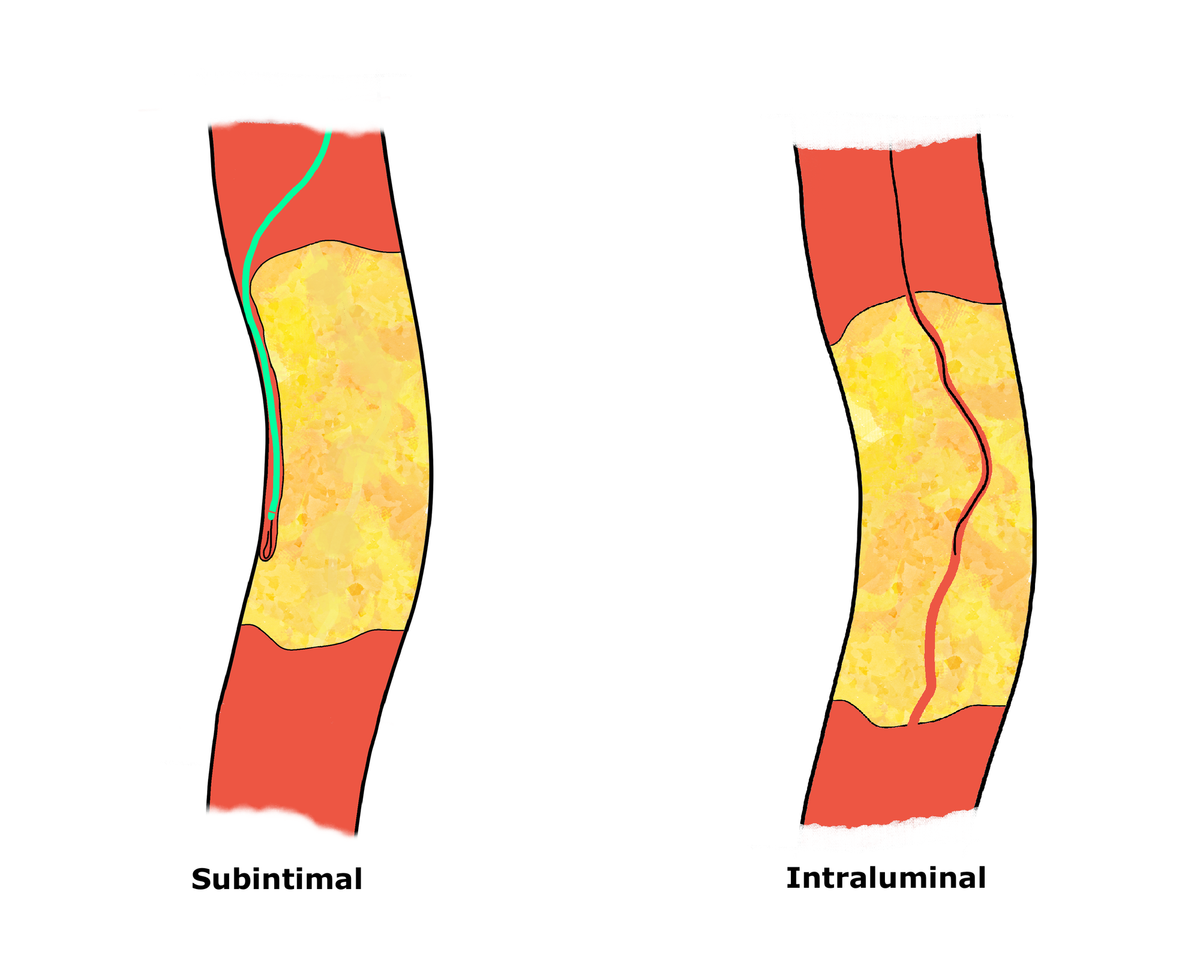
Once the Target Arterial Path is chosen, the technical question becomes how to cross the CTO. In long femoropopliteal occlusions the relationship between intraluminal and subintimal recanalization is more nuanced than the textbook sequence suggests — three scenarios worth distinguishing.

Intraluminal or Subintimal?
About Me | My Book | Previous posts | Manage Account
In the previous article [here] we discussed the strategic dimension of long and multilevel CTOs in CLTI: the choice of the Target Arterial Path (TAP) according to the Global Vascular Guidelines - also considering the angiosome concept when relevant – and the principle of committing to one vessel rather than chasing the entire arterial tree. Once the TAP has been chosen, the technical question becomes how to cross the CTO.
The principle of guidewire escalation applies here as in any other CTO scenario: start with low-to-moderate tip-load guidewires, attempt sliding and drilling techniques, escalate only if necessary. There is, however, an important peculiarity of long lesions.
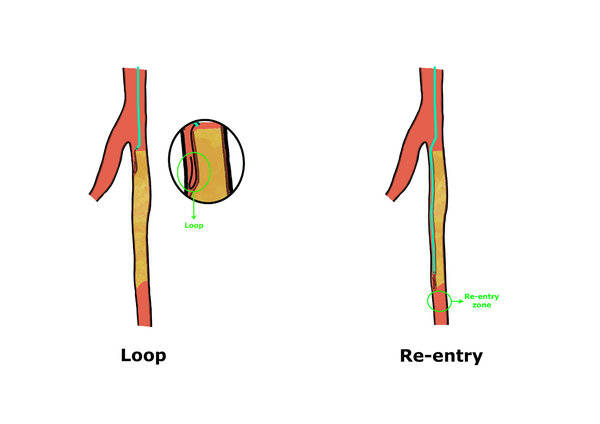
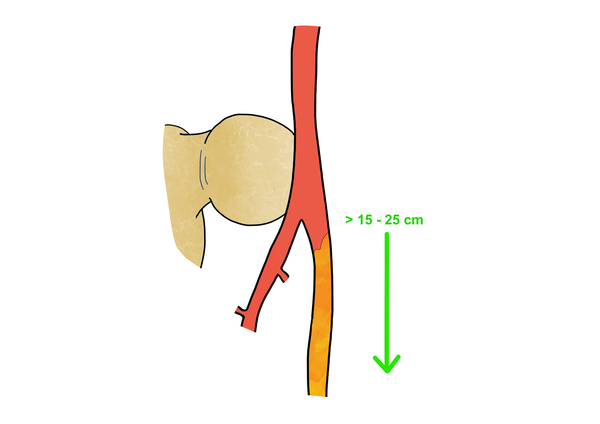
In long femoropopliteal CTOs, the relationship between intraluminal and subintimal recanalization deserves a more thoughtful framing than the textbook sequence “try intraluminal first, switch to subintimal if it fails”. Three scenarios should be distinguished.