CTO REVASCULARIZATION Series: Part 2A
Before discussing how to cross a long or multilevel CTO, we need a more fundamental question: which vessel do we recanalize? The strategic framework of the 2019 Global Vascular Guidelines — Target Arterial Path, GLASS, and the role of the angiosome — defines everything that follows.

Long Lesions and multilevel disease - The Strategic Question
About Me | My Book | Previous posts | Manage Account
After our first article on severely calcified arteriopathy, we turn to the second order of complexity in CTO recanalization: long lesions and multilevel disease. This is, in my experience, the most frequent scenario in CLTI patients — and it is not uncommon for the two orders of complexity to overlap, with long, severely calcified CTOs representing some of the toughest cases we face at the angio-suite.
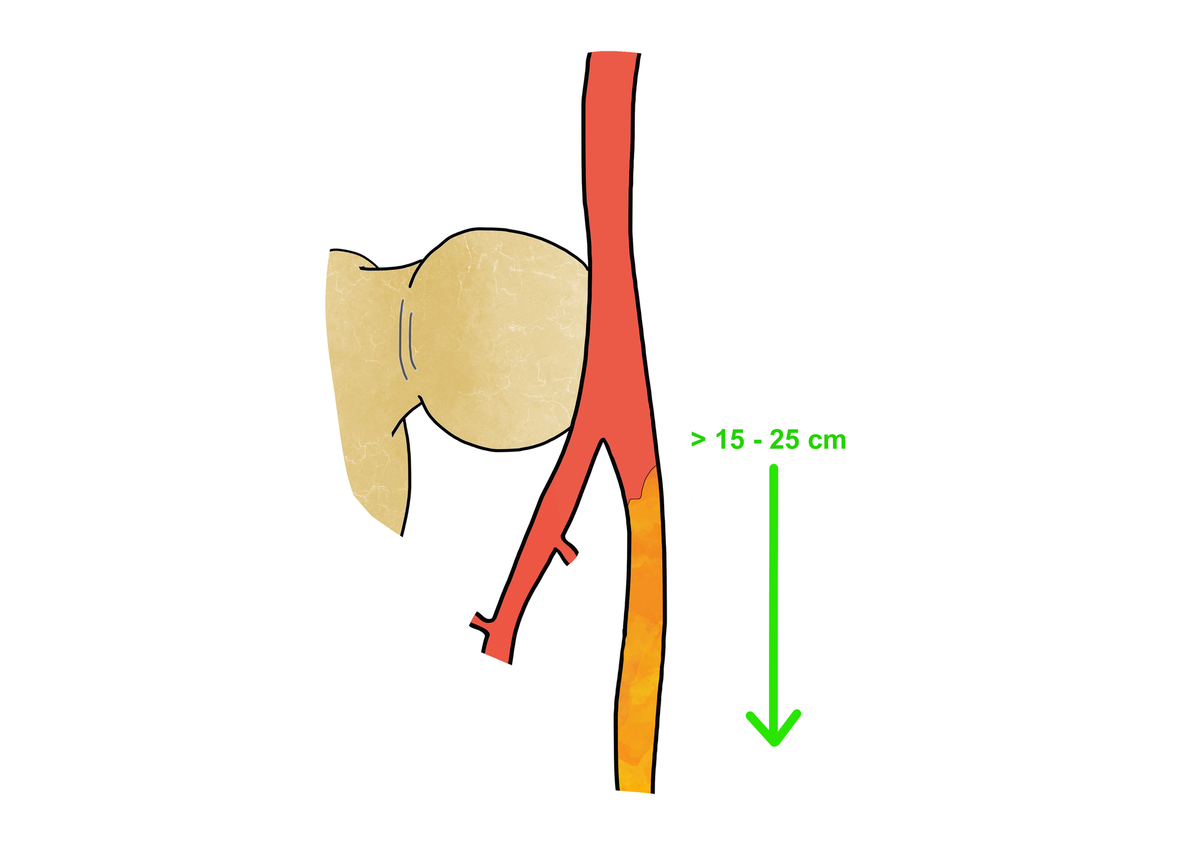
There is no universally accepted threshold for what makes a CTO long. TASC II and the GLASS classification proposed by the Global Vascular Guidelines (Conte et al., J Vasc Surg 2019) both consider a femoropopliteal occlusion exceeding 20 cm — or involving the distal popliteal artery — as the highest complexity grade (TASC II D, GLASS FP grade 4).
In practice, I tend to consider 15–20 cm the threshold beyond which the wire-handling complexity of the lesion changes qualitatively.
Multilevel disease, on the other hand, is the rule rather than the exception in CLTI: most patients present with multiple occlusions scattered along the infrainguinal tree, combining femoropopliteal and infrapopliteal segments in various permutations.
Which vessel to recanalize
Before discussing how to cross a long or multilevel CTO, we need to answer a more fundamental question: which vessel do we choose to recanalize? In multilevel CLTI, this decision is upstream of any technical consideration about wires, catheters or crossing techniques.