Tips & Tricks in Endovascular Surgery - The Book
A practical collection of endovascular Tips & Tricks and technical details, born from real clinical experience. The book behind the method used inside Endovascular Insider.
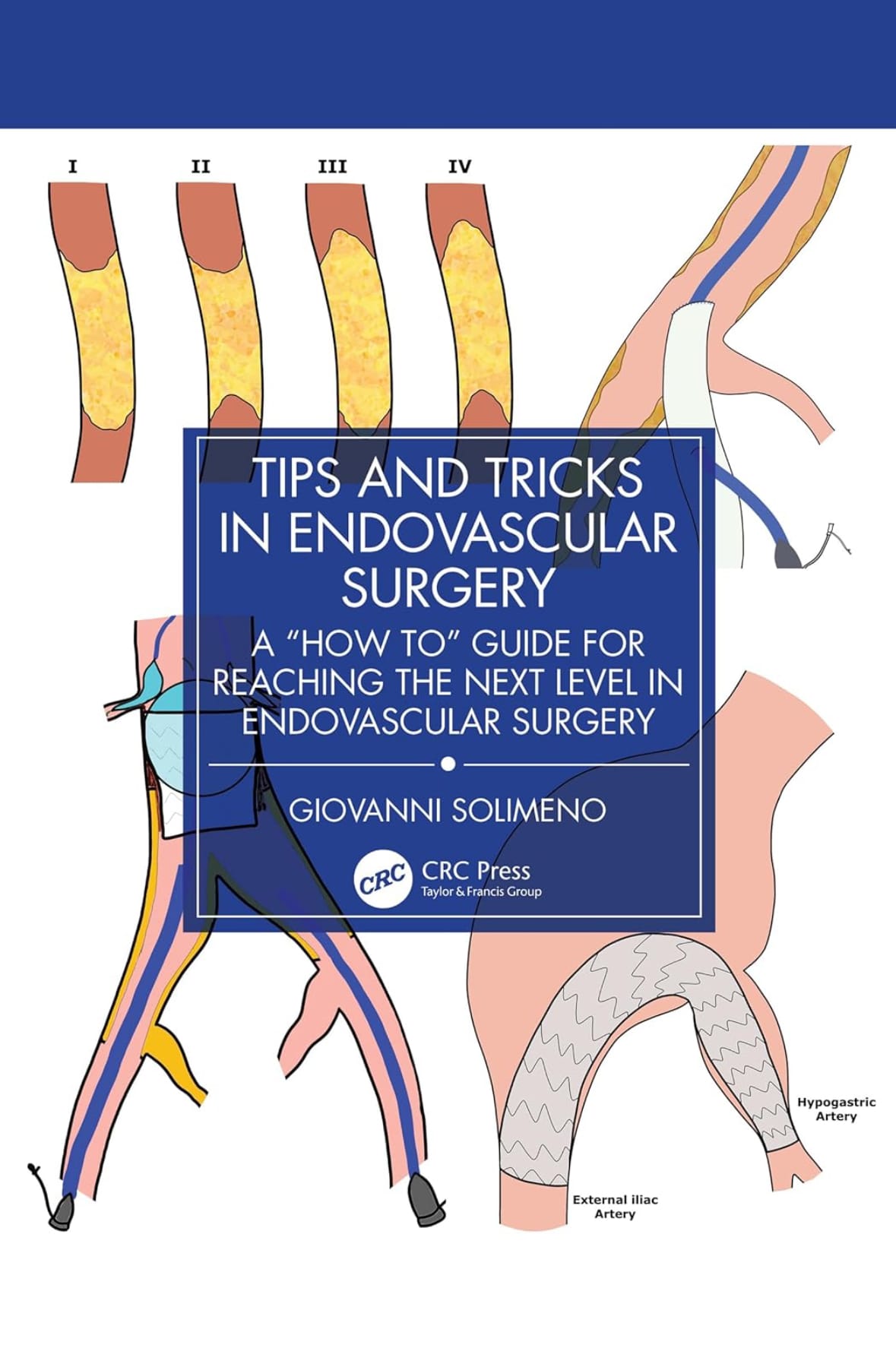
The book that gave rise to the method
In every discipline there is a distance between what one studies and what one actually does.
In endovascular surgery, that distance can become a real gap: theory on one side, the everyday reality of the angio suite on the other.
It is in that space – made of gestures, intuitions, errors, observations, and small victories – that this book was born.
Tips & Tricks in Endovascular Surgery is not a manual in the traditional sense.
It is an attempt to give shape to everything that, in our field, remains implicit: the experience no one writes down, the detail you learn only by watching, the unexpected solution that comes from a mistake, the technical shortcut that changes a procedure.
It is a book for those who believe that in our profession, one never stops learning.
Why this book was written
It does not come from any special talent of mine.
If anything, it comes from a lack.
From the awareness, built over the years, of having encountered gaps, grey areas, uncertainties.
Gaps that pushed me to observe, take notes, understand, experiment.
And that gradually formed, note after note, a kind of operative notebook.
What kind of book it is
Each Tip is an autonomous concept.
You can open the book to any page and find something you can use the next morning in the operating room.
The Tips are organized into thematic sections, designed for quick consultation.
One could say the text has an almost aphoristic structure.
Next to each Tip there is a “traffic light code” – green, orange, red – which helps orient the reader according to the level of technical difficulty required.
Why it matters to Endovascular Insider
Endovascular Insider was born from that same approach.
The mission of the club is to bring to light what usually remains invisible in endovascular surgery: the reasoning, the choices, the details that make the difference in everyday practice.
This book is the root of that approach.
It shares the same format and the same underlying mission.
If even a single Tip proves useful, if it sparks a doubt or a new idea, then the work behind this book will have been worthwhile.